
Reflections from Māhia
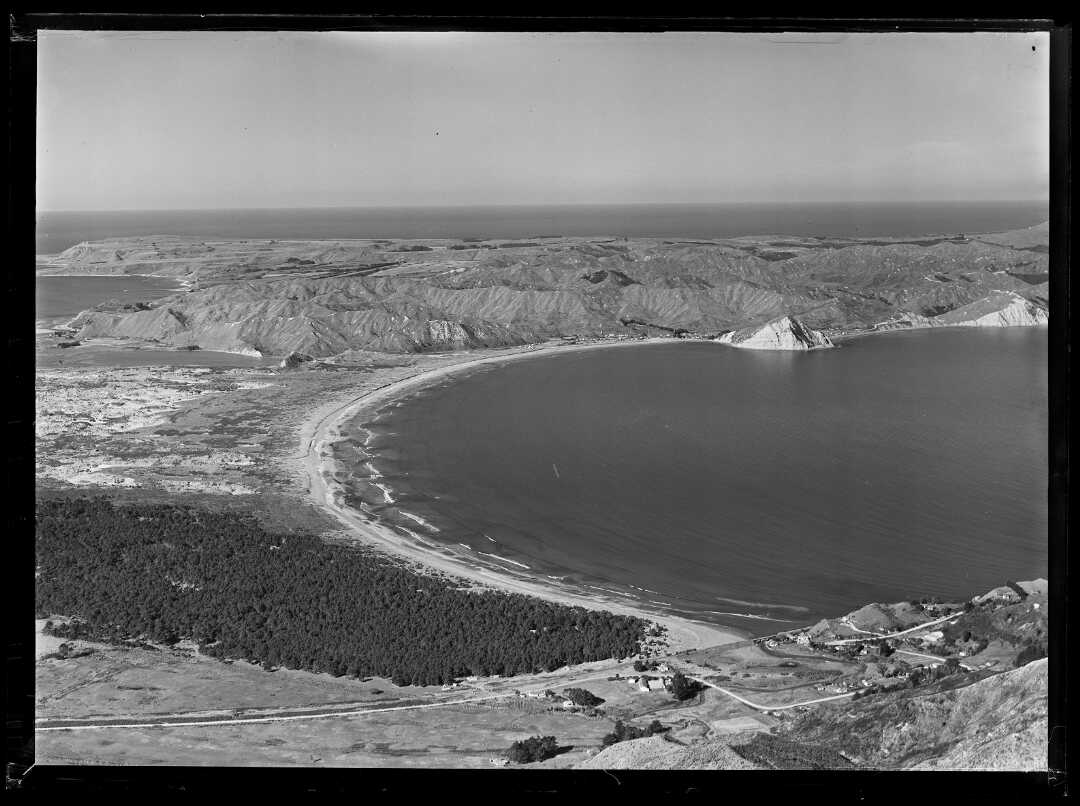
Isolated Māori communities like Māhia understands loss. Rongomaiwahine, the iwi of this beautiful peninsula, have suffered loss of land and language, of tikanga and spirituality. Entire whakapapa lines have perished due to pandemics breaching the community from the outside, or wars that took young men to the other side of the world where they remain buried in foreign battlefields. For the better part of the 20th century the mamae was raw; the minds, hearts and bodies of our people continued to be battered as they remained trapped deep in the destructive vortex of colonisation.
In this new century however, there is refusal for the pain to be the centre of the contemporary Māori experience. Connection and commemoration are the tools used to combat alienation and assimilation. And the memory of loss motivates iwi, including Rongomaiwahine, to assert their mana motuhake and protect themselves against the grand forces and events rattling our world today.
15 JANUARY, 1922. TUĀHURU MARAE, MĀHIA
Paratene Tangiora rises from the paepae.
He stands at the ātea, before the whare tīpuna Hine Te Rongo, and scans the ope across from him. Close to 700 visitors from the Hawke’s Bay region and beyond have arrived for this day of commemoration. Paratene is not yet 30. It is quite a young age to be speaking to such an impressive gathering. But the kaupapa demands it. The kaupapa is significant to him in a way that can only be imagined by everyone else. Paratene delivers his whaikōrero.
Today is the unveiling of a cenotaph. A memorial to the young men of Māhia who served in the Maori (Pioneer) Battalion during the Great War. Whanaunga, each of them. Descendants of Rongomaiwahine who fought on the cliffs of Gallipoli, worked the black mud of France. Only to die far from their whenua.
Paratene was with the battalion. He spent a little under three years in France and was discharged as a Lance Corporal when the war ended. His three brothers were also in the battalion, but they were lost. Paratene was the only brother to survive.
As one who lives, Paratene speaks for those many who do not. As one who made his way through the storm of artillery fire, Paratene speaks for a grieving community. For the two brothers who lie in soil on the other side of the world. For the one brother who returned but suffered the sickness of the trenches, and is now at rest in the urupā just down the road. Paratene speaks, because survival means he has an obligation to the fallen.

The powhiri is complete and the congregation makes their way to Whakarewa, where the cenotaph stands. A life-sized statue, carved from Coromandel granite. A soldier in full uniform. His rifle reversed. The likeness is of Alexander Ormond, a cousin to Paratene, who was killed at the Somme. The statue is set on a base engraved with the names of those who died. Paratene sees his brothers.
Hona, Rewi and Tere[*].
Here now is a stone on Māhia, dedicated to his whanaunga. Paratene evokes these warriors. He and the iwi of Rongomaiwahine call to the mauri of their lost sons. Beckon them to cross back over the oceans and rest in the whenua of their ancestors.
A bugler sounds the Last Post. The sun radiates from the highest seat of a bright blue sky as the gentle wash of tumbling waves fills Paratene’s ears.
18 JANUARY, 1916. MOASCAR MILITARY CAMP, ISMAILIA, EGYPT
Pte. Hona Hape watches the dust column on the horizon.
He is in the desert with his comrades. There are around 40 of them. Waiting. Shirtless and bootless, dressed only in khaki shorts. Their skins darkened by a sun that has baked these lands since the days of ancient kings. Hona stands upright but remains loose at the shoulders. He centres his weight over the balls of his feet and does not let his heels rest heavy on the sand. He is prepared. His entire battle hardened taua is always prepared. The dust cloud approaches.
Hona first arrived in Egypt less than a year ago. Part of Te Hokowhitu-a-Tū, the Māori Contingent of New Zealand’s Expeditionary Forces. They were nearly 500 strong when they commenced training at Zeitoun Camp near Cairo, then here in Moascar. Even a couple of months were spent training in Malta. By this time however, the boys were tired of bayonetting sandbags and performing haka shows for high-ranking officials. They itched for battle.
While on Malta, the contingent got what they wanted. What they were training for. Word they were finally going to leave the safety of camp and face the enemy at Gallipoli.
Hona and the contingent landed at Anzac Cove on 3 July, 1915. It was a few hours after midnight. Orange flashes of artillery and naval gunfire tore through the night sky. Among the boom of the big guns could be heard the crack of rifles on the hills. Hona had entered the theatre of war.
Over the next few days the contingent established itself at No. 1 Outpost, erecting a village of dugouts and shelters dubbed Māori Pah. The rest of July was spent doing pioneers mahi. Digging communication trenches, building new roads, improving existing ones and cutting out terraces. The Turks kept up their assault. Shell explosions and hails of shrapnel, sniper and machine gun attacks. Many Māori were maimed or killed but Hona and the rest continued their mahi. Under the sweltering sun, through dysentery and disease, the contingent swung their picks and shovels.
The new month brought with it a plan for a new offensive. British attempts to break through the Turkish lines further south had failed. So it fell to the Anzacs to salvage the entire campaign. Te Hokowhitu-a-Tū would play a pivotal role.
The contingent was made up of two companies, A and B. These were comprised of 4 platoons, each were arranged according to iwi and rohe. Hona was in B Company, 8th Platoon, alongside his whanaunga from Rongomaiwahine and Ngāti Kahungunu.
The mission was to capture the highest peaks of the Sari Bair range - Hill 971, Hill Q and Chunuk Bair. But first, the foothills needed to be secured. The Turks held trenches on the lower steppes at Destroyer Hill, Table Top, Bauchop’s Hill and Little Table Top. These had to be taken by New Zealand Mounted Rifle Brigade units and the Māori Contingent, to clear a path to the final objective. The operation would commence at night on 6 August.
Early on that evening, several hours before the attack began, the men received final instructions. Silence and surprise would be key. Therefore, no loaded rifles. They would take to the enemy with bayonets only.
After these instructions Hona and the contingent came together for karakia led by the Chaplain, Hēnare Wēpiha Te Wainohu. He made his kōrero to the men not as a contingent but as a whānau, and reminded them of their duty beyond what they owed their commanders. A duty to the mana of all te iwi Māori. To their families back home and their tīpuna who have gone before.
Bombs blew apart the evening gloom but Hona heard nothing other than the Padre’s words. “Meāke nei,” Te Wainohu spoke.
“Pakū tō koutou rongo toa i runga i ēnei maunga ki ngā wāhi katoa o te ao, anō he ahi nui e kore rawa e tāea te tinei.”
“Soon, your heroic deeds will spread over these mountains to all parts of the world, like a great fire that can never be extinguished.”
Te Wainohu’s eyes glistened in the evening light as he began a waiata, the hymn ‘Au E Ihu.’ The voices of the entire contingent joined. Hona’s tears flowed. They flowed from all the Māori who sang under the shadow of Sari Bair.
Hona blinks away tears from the Egyptian dust blown into his eyes. Dust from the cloud he and his 40 comrades have been patiently watching. The cloud is a convoy bringing 300 reinforcements. A 2nd Māori Contingent freshly arrived from home to shore up the depleted battalion.
The fit, new soldiers form up and approach. Their uniforms are clean, unlike the garments stained with use that Hona has been wearing. He tenses, and keeps his eyes focussed on the ope across the sand. Captain Te Rangi Hīroa stands in front of Hona and his contingent. He is their rangatira. His care and authority that night on the Sari Bair foothills has endowed him with the mana of a war leader. Te Rangi Hīroa grips a stone mere in his right hand. With a sharp movement he raises the mere above his head and calls out to his men.
“KIA MAU!”
Hona and the warriors beside him release all their ihi. The haka is Ka Mate.
Hona slaps his thighs, he beats his foot into the sand.
“KA MATE, KA MATE!”
At the reserve position, No. 2 Outpost. Hona hears haka from the other platoons who have made their attacks.
“KA ORA! KA ORA!”
It signals that another trench has been taken, and the Turks who once held it have been slain.
“KA MATE! KA MATE!”
Sporadic fire. Rattling for brief seconds. Silence.
“KA ORA! KA ORA!”
The silence that come at the point of a bayonet.
“TĒNEI TE TANGATA, PU-HURU-HURU!”
Hona’s platoon joins the assault, to back up the men of the Otago Mounted Rifles who are trying to clear out trenches on Bauchop’s Hill. They are taking casualties. Otago men are falling. Dying.
“NANA NEI I TIKI MAI WHAKAWHITI TE RĀ!”
Hona and his Rongomaiwahine whanaunga scramble up a short hill. Thorny scrub tears at him. The trench is ahead. His platoon leader, Second Lieutenant Jack Tikao, barely yells the command to charge. Hona and his war party descend upon the Turks.
“UPANE! KA UPANE!”
Bayonets in the dark. Screaming. The thud of bodies hitting the dirt. Hona’s arm is made strong by Tūmatauenga.
“HUPANE! KAUPANE!”
Haka rings out from across the valley to the south. The energy of the earth in Turkey is the same as Aotearoa.
“WHITI TE RĀ!”
The kupu echo off the marl coloured stone of Sari Bair, and charge down the dried water courses. The reo of the Māori shouts back at the blast of artillery shells.
“HĪ!”
Hona and the warriors who survived that night, survived the nights that were still to come during the terrible Gallipoli campaign, stand defiant in the desert of Egypt. The original contingent of Te Hokowhitu-a-Tū scraped, dug, and sheltered on hills that did not belong to them. Hona fought and bled. He watched a flood of his friends and fellow countrymen, his relations, pour down those hills. Injured, dying. Already dead. He snatched away the lives of men defending their peninsula. He survived under the thunder claps made by modern machines of slaughter. To be here. To perform this haka powhiri and welcome this new contingent. He did it to be here.
The whaikōrero are completed and the long awaited harirū begins. Hona gladly gives mihi to these men who will soon suffer and sacrifice in a different field of battle. France.
One new arrival catches Hona’s eye. The pair grasp one another by the hand and bring their noses together. They breathe in the essence of one another, and exhale their own essence as an offering of acknowledgement and aroha.
Hona is reunited with his brother Tere.
MĀHIA, AUTUMN 2020
The Rongomaiwahine iwi moved to protect the community of Māhia when the COVID-19 virus came to Aotearoa in the autumn of 2020. Theirs was a whakawhanaungatanga response, steered by the memory of lives lost to the influenza outbreak of 1918. The purpose was to protect whakapapa. The whānau of Rongomaiwahine are not merely individuals who happen to live in a true paradise on earth, they are the continuation of whakapapa lines that have survived and thrived despite disenfranchisement, disconnection and attempted-dissolution. Among them are the language-bearers and tikanga practitioners of the future. The iwi were determined not to risk facing the deadly impacts of another pandemic.
Rongomaiwahine knows that whakapapa lines are fragile. Not only can this be illustrated by the impact of disease, but also the impact of war. Many young men from Māhia volunteered to serve and fight during the First World War, including my great-grandfather Paratene Tangiora. He, along with his brothers, joined different contingents of the Pioneer Maori Battalion. They all travelled to Europe, but only Paratene survived. Two brothers succumbed to disease, one fell during the battle of Messines. When he returned to Māhia he married and raised a family. Paratene’s whakapapa line survives to this day, while his brothers’ came to an end during a war in another land.
The link between Rongomaiwahine’s fight against COVID-19 and my whanaunga’s World War I experience is how the memory of loss leads to the protection of whakapapa.
THE FOUR BROTHERS
Brothers Tere Hape, Hona Hape, Brougton Tangiora and Rewi Tangiora served in the First World War. Only Paratene returned. Tere and Hone took the first name of their father as their surname and Brougton and Rewi the Tangiora ingoa.
Tere Hape (16/949) - known as Tere Tangiora (1891-1917)
Hona Hape (16/536) known as Hona Tangiora (1893-1919)
Rewi Tangiora (16/1460) (1883-1919)
Broughton Tangiora (16/1417 / 16/417) - known as Paraete Tururu Tangiora (1892-1967)
[*] On the cenotaph, which now stands at Kaiuku Marae, Tere’s name is misspelled as ‘Iere’. It can be assumed to be a mistake on the part of the stone mason, though any who might confirm this have long passed away. However, there is no denying that it is Tere memorialised on the monument.
Jason Renes (Ngāi Tūhoe me Rongomaiwahine ngā iwi) is a Whakatane based journalist.
This article was made possible by a Copyright Licensing New Zealand COVID-19 Contestable Fund Grant
Tohutorohia tēnei tuhinga
Renes, Jason. Reflections from Māhia. Auckland Museum - Tāmaki Paenga Hira. First published: 15 Mah 2020. Updated: 25 Mah 2026.
URL: https://www.aucklandmuseum.com/mi/war-memorial/online-cenotaph/features/reflections/renes